


Texts : Tuscan Bestiary
These excerpts from the Tuscan Bestiary are taken from Garver & McKenzie, Il Bestiario Toscano: secondo la lexione dei codice di Padua e di Roma (1912). The English version is not an exact translation; it was machine translated (Google translate), then corrected as necessary. The images are from manuscript Wellcome Collection, MS.132.

Bestiary
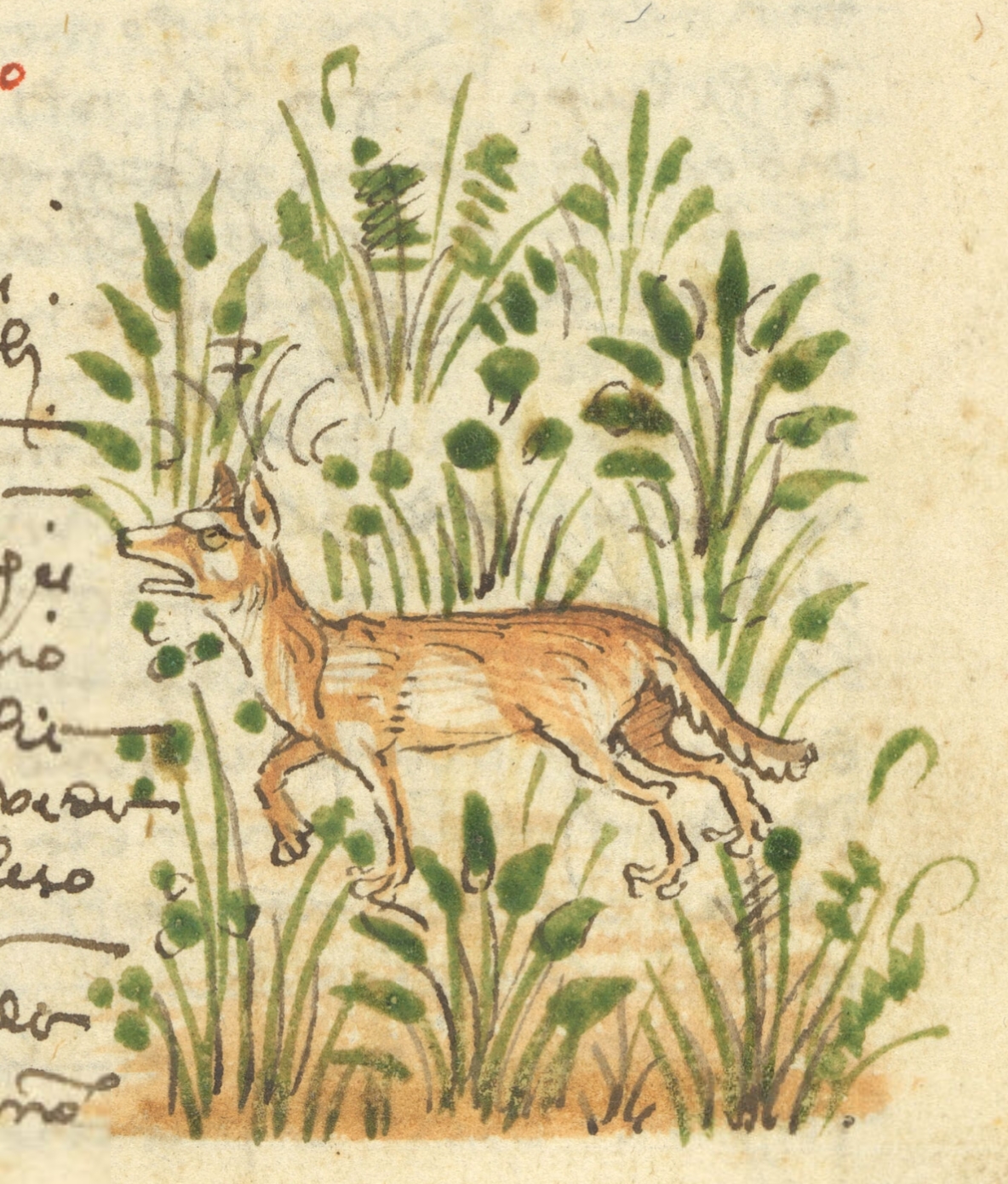

De la natura del lupo [wolf]
Lo lupo si è uno animale che ave in sé di proprie nature; ché elli si è nominato rappace cioè rapitore, ché elli vive de preda; e quando elli viene a intrare in alcuno luogho per involare, si va molto guardingamente, e sse elli facesse alcuno sentore, sì ssi prende li piedi colli denti e sì se li morde fortemente. L'altra natura si è che elli tolle lo vigore all'omo, se ello vede l'omo nanci che l'omo vega lui. E si l'omo vede nanci lui che 'l lupo lu vega, si tolle l'omo lo vigore al lupo. E anco dice homo che ello ave cotale natura, che lo maschio non ingenera fine che 'l padre è vivo, né la femina non porta fine che la matre è viva. Et questa è la cagione per che delli lupi sono meno che delle pecore; ché la peccora non fa se non uno solo figliolo l'anno, e la lupa ne porta si como fa la cagna. L'altra natura si è che elli ae si reddo lo collo che non lo può volgliere se non collo pecto insieme. Questo lupo si c'insegna e mostra exemplo di molte maniere di homini; ché si como lo lupo vive de rapina, cussi sono homini di tanta malvagità che tuto tempo viveno di rapina; e sì como lo lupo intra per involare guardingamente, cussi sono certi homini meschini che intrano in certi offitii ecclesiastichi e mondani propriamente per involare e per rapire quelle cose che llo conduceno in periculo da morte, e vanno con grande guardia monstrandosi essere quello che non sono per intrare in quello logho. E quando avenisse che elli si fae sentire per alcuna sua malvagia opera, si tribula poi se medesmo per paura di non essere cognoscuto. E sichome lo lupo che tolle la voce e lo vigore a l'omo quando lo vede nançi che l'omo lui vega, così divene al malvagio homo che non si guarda del dyabole; che s'el diavole li entra sopra colle sue rie presure, si li tolle la paraula e lo vigore che non prende confessione che uno cavallieri che era molto amato da uno grande signore si infermò molto fortemente, e quando lo signore che tanto l'amava intese la sua graveçça, si andoe a visitare e congnove che non era campatoio, si ne li pesò molto, e confortavalo che si confessasse; e quello respose: Non posso, che lo dimonio mi tiene si incathenata la gola ch'io non è balia. Ora in chotale mainera era questo isvigorito da dimonio, e cussi parlando ne portò lo dimonio la sua anima in inferno. Si come lo homo che tolle lo vigore al lupo quando lo vidde nançi che lo lupo vega lui, cusì devene del buono homo che si sa guardare e vede che cosa è lo dimonio e cognosce le sue opere, si li tolle força e vigore, che non po fare danno alla sua anima, ançi danegia lo buono homo lui, che con soi buone paraule e con soi boni facti si li tolle l'anime le quale elli menarebbe ad inferno, e in chotal maniera l'omo isvigorisce lo dimonio. E cossì come lo lupo non engenera né nonne engravida fine a tanto che è vivo lo patre del maschio e la madre della femena, cossi devene dell'omo peccatore, che in fin a tanto che ' peccatore dimora in del peccato, tutte le sue opere sono sença fructo dinançi Dio; e in fine ad tanto che non muore in del peccato lo padre e la matre del peccatore, non po fare fructo che piaccia tanto a Dio che lui possa salvare; e chi è padre e madre del peccato? Superbia, che è il principio del peccato, e ingratitudine, che tutti li nutrica quanti homo ne fae. E sopra queste due malitie si potrebbeno molto dire; ma diviene verace exemplo, che è come io vo dico : la Scriptura santa dice che 'l primo peccato che ssi pensoe si fue superbia, launde Lucifero cadde in profondo de l'inferno ch'era in de l'alta gloria. Apresso si è ingratitudine notricatrice di tutti li peccati; ché similemente Lucifero che era lo più bello e lo più savio angelo che Dio creasse, si regna in lui la congnoscentia di tutto questo benefitio, e volse essere pare ¹ del suo creatore; lo simigliante divenne d'Adamo e di tutti quelli che peccano. Or questi principii delli peccati convene che homo abandoni e possa fare fructo che ' l conducerà in del regno del cielo. Dunqua da che lupo, che è rapitore e monstra con tanti exempli, dunqua bène dovemo prendere della pecora che è si mansueta et è di tanto fructo.
The wolf is an animal that has its own nature; for it is called a predator, that is, a raptor, because it lives on prey; and when it comes to enter a place to hunt, it proceeds very cautiously, and if it makes any noise, it seizes its feet with its teeth and bites them hard. Its other nature is that it takes away the strength of man if it sees man before man sees it. And if a man the wolf him before the wolf sees the man, the man takes away the strength of the wolf. And wolf is also said to have such a nature that the male does not beget children while his father is alive, and the female does not bring forth offspring while her mother is alive. And this is the reason why wolves are fewer than sheep; for the ewe bears one son a year, and the she-wolf bears it like a dog [meaning unclear]. The other nature of the wolf is that it has a neck so thick that it cannot move it without moving its chest. The wolf teaches us and shows us an example of many human ways; for just as the wolf lives by plunder, so are men of such wickedness that they live all the time by plunder; and just as the wolf enters cautiously to steal away, so are certain wretched men who enter certain ecclesiastical and worldly offices precisely to steal and snatch away those things that put them in mortal danger, and they go with great caution, pretending to be what they are not to enter that place. And if it happens that a man makes himself known for some evil deed of his, he then troubles himself for fear of being recognized. And just as the wolf takes away a man's voice and strength when he sees him, so it becomes with the wicked man who does not guard himself against the devil; for if the devil enters upon him with his cruel temptations, he takes away his speech and strength, and so does not allow confession. A knight who was much loved by a great lord became very seriously ill, and when the lord who loved him so much understood his seriousness, he went to visit him and, realizing that he was not safe, he was very sorry for him and urged him to confess; and he replied: "I cannot, for the devil has my throat so chained that I have no power." Now in this case he was weakened by the devil, and thus speaking, the devil carried his soul to hell. Just as the man who takes away the strength of the wolf when he sees it before the wolf sees him, so it is with the good man who knows how to look and see what the devil is and knows his works, and takes away his strength and vigour, so that the devil cannot harm his soul, but instead the good man with his good words and his good deeds takes away the souls the devil would lead to hell, and in this way the man weakens the devil. And just as the wolf neither begets nor impregnates to an end as long as the father of the male and the mother of the female are alive, so it is with the sinful man, that as long as the sinner abides in sin, all his works are fruitless before God. And finally, unless the father and mother of the sin die, a man cannot bear the fruit that pleases God enough to save him. And what is the father and mother of sin? Pride, which is the beginning of sin, and ingratitude, which nourishes all sins as many as a man makes. And much could be said about these two evils, but a true example becomes, which is as I want to say: Holy Scripture says that the first sin that was thought of was pride, whereupon Lucifer who was in high glory fell into the depths of hell. Then comes ingratitude, the nourisher of all sins; for similarly Lucifer, who was the most beautiful and wisest angel that God created, is filled with knowledge of all this benefit, and he wanted to be equal to his creator; the same became true of Adam and of all those who sin. Now these beginnings of sin must be abandoned by man in order to bear fruit that will lead him to the kingdom of heaven. Therefore, as for the wolf, who is a raptor and shows us this with so many examples, we must take the example from the sheep that is so meek and bears so much fruit.
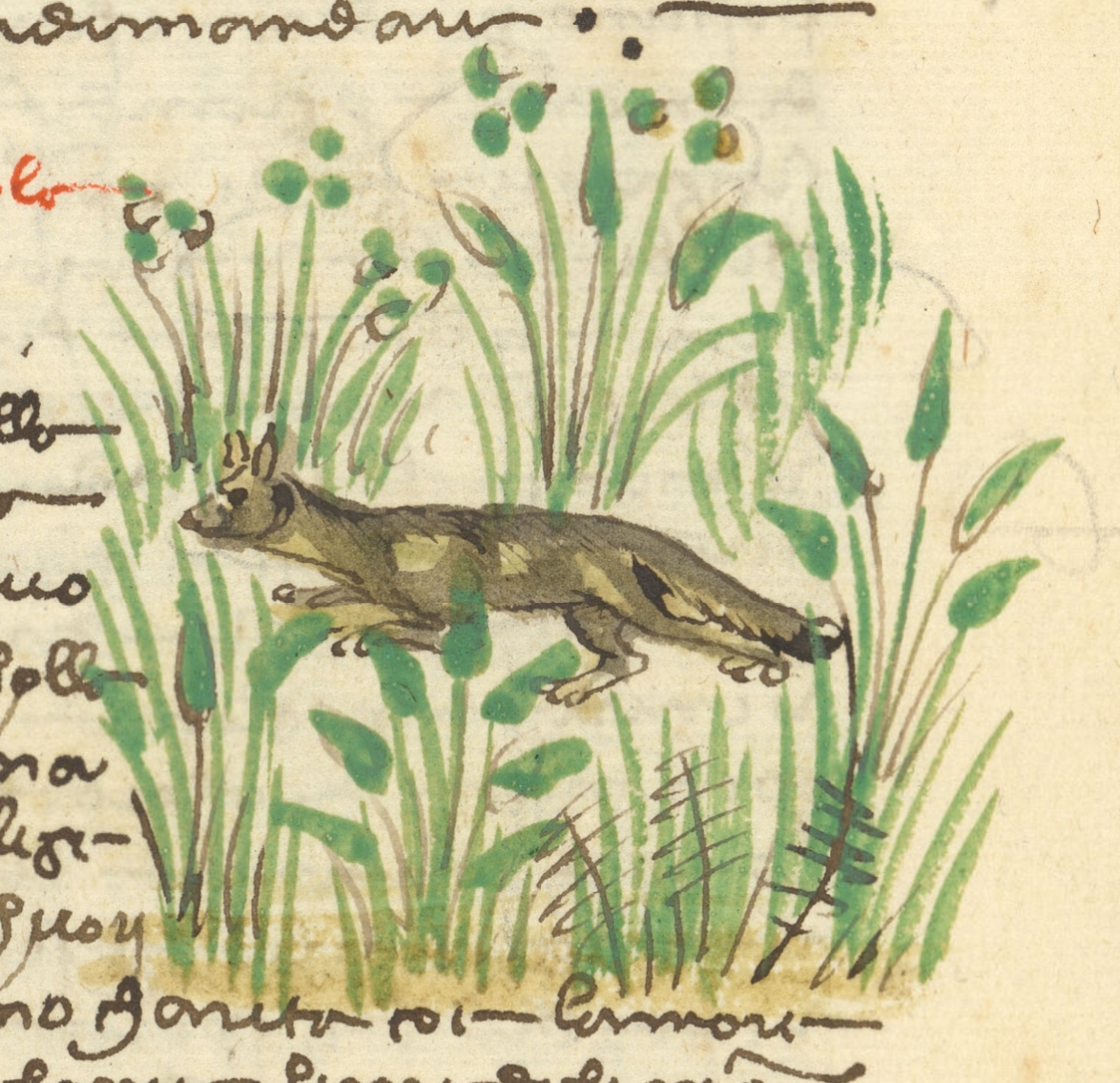
De la natura della bellula [weasel]
La bellula si è una piccula bestiola e ane in sé una forte natura, ch'ella ingenera per li orecchi e figlia per la bocca e fa li soi filioli morti. E homo dice ch'ella conosce una erba colla quale li fae vivi. Questa bellula significa lo bono predicatore, che predica le paraule de li Evangelii e de le pistole e delle profecie e le legge vecchia e la novella in de l'orecchi e in de li cuori dell'omini del mondo. Ché elli predicano caritade cioè amore de Dio sopra tutte le cose e lo proximo como se medesemo. Elli predicano povertade e pace e humelitade e castitade e dirictura. Si che elli più de li homini non sequitano queste virtude, ançi sono quasi pogo che seguita et¹ esciene loro di chuore, e cossi sono in loro mortificate. Queste persone si si vieno ricordando una partita di loro e vienosi ricordando delle buone paraule che anno udito dire, le quale aviano per dimentichate, si vanno per l'erbe che suscitano le bone paraule che anno udite; e quale è quella erba dirovelo, che è la rimembrança della gloria di paradiso e la rimembrança delle pene d'inferno. Or sappia bene ciascuno homo questo per lo certo, che queste sono le cagione che fano ricordare li peccatori a ffare bene.
The weasel is a small animal, and it has within itself a strong nature. It conceives through its ears, gives birth through its mouth, and gives birth to dead offspring. And it is said that it knows a herb with which it brings them to life. This weasel represents the good preacher, who preaches the parables of the Gospels, the parables, and the prophecies, and reads them, old and new, into the ears and hearts of the men of the world. For they preach charity, that is, love of God above all things and of one's neighbor as oneself. They preach poverty and peace and humility and chastity and righteousness. So that they no longer follow these virtues, but rather are almost a thing that comes and goes from their hearts, and thus they are mortified in them. These people, when they come to remember something they have heard, and when they recall the good parables they had forgotten, they wander about the herbs that evoke the good parables they have heard. And what that herb is, I will tell you: it is the remembrance of the glory of heaven and the remembrance of the pains of hell. Now let every man know this well for certain: these are the reasons that remind sinners to do good.
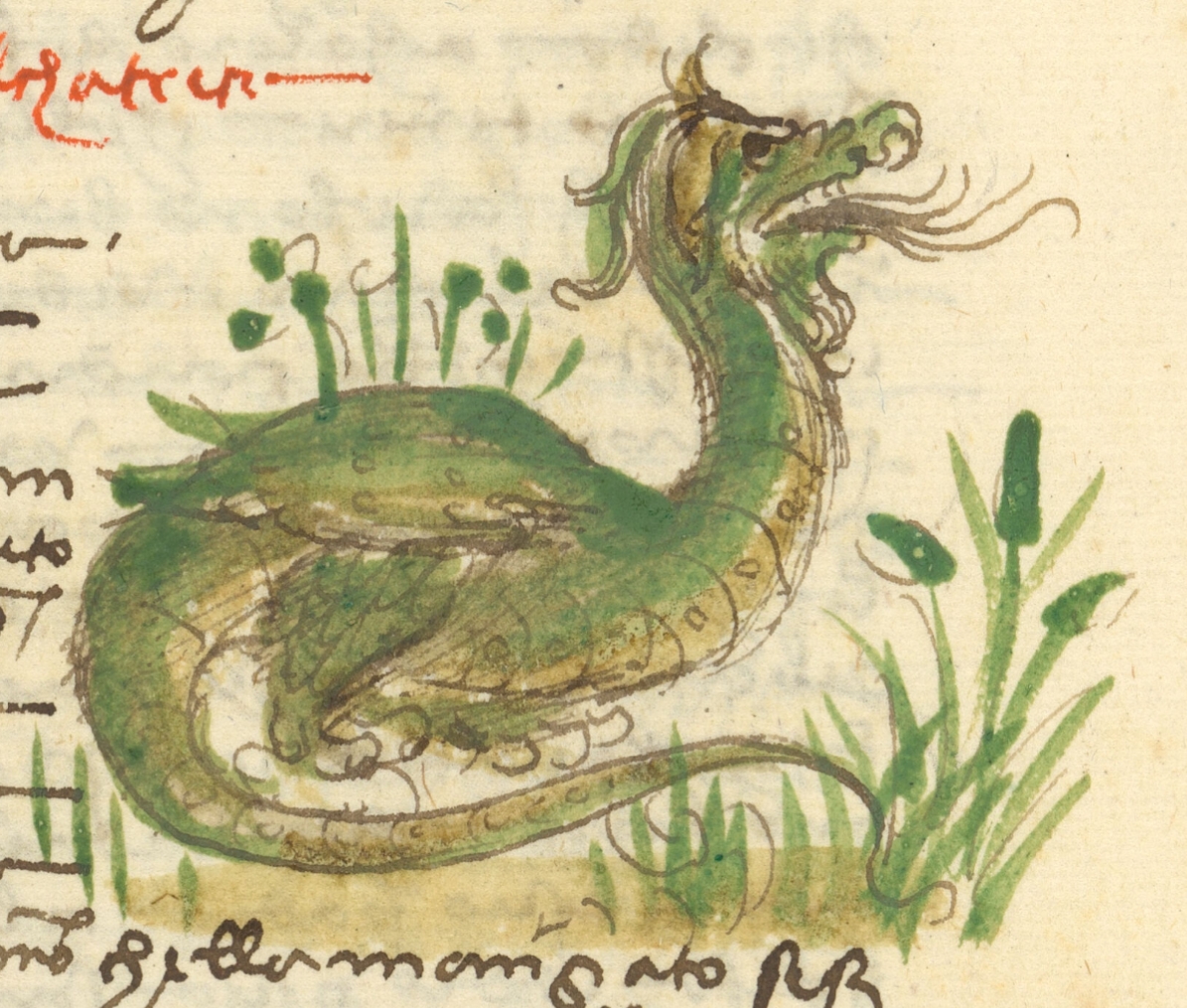
Della natura della calchatrice [crocodile]
La calchatrice si è uno serpente grandissimo e grosissimo ela sua facteçça è como diragio; e ave cotale natura che s'ella trova alcuno homo, si se lo mangia e possa ch'ella l'ae mangiato si llo piange tutto lo tempo de la sua vita. Et è un altro serpente che ave molte teste; e quando ne gli è tagliata una, sì ne lli nascie due; e trova questa calcatrice che piange lo homo ché ae manducato, si se giecta in terra per tradito, e la calchatrice viene e si lo mangia sano e salvo; e quando questo si è in corpo si li rompe le budella e esceli fuore del corpo e fanne grande allegreççe; e questo si briga di fare incontenente ch'elli vede la calcatrice che avea mangiato lo homo. E anco ave la calcatrice una altra natura, che quando ella magnia, non mena si no lla masella di sopra. Questa calchatrice, in ciò ch'ella mangia homo e possa lo piange tutto lo tempo della sua vita, si se poe similiare ad alquante spirituale persone di questo mondo che anno dentro da loro cuore incorporato lo verace Dio e homo che fu crucifixo per recomperare l'umana generatione; ché quando lo spiritale homo si rimembra che cosi alto signore volse discendere in del corpo della nostra donna e volse fare tutte le suggectione che homo dee fare a padre et a madre, e volse essere povero e digiuno e etiandio volse sufferire che elli fusseno date le collate e le gottate e sputato in faccia e smentito e batuto a la columna e iudicato a morte e posto in croce chiavato con acuti grossissimi, portandosi li pessi de la carne innançi e de le nerbora, e postoli corona di spine che fue giunchi marini che li pertusono la testa fin a l'ossa, e datoli bevere aceto e felle meschiato, e ferito in del costato con una lancia, sì li vene a lo spiritale homo grande compassione e grande dolore dentro del suo cuore. Sì come divenne di messere sancto Francisco, che sì grande fue la sua conpassione ch'ebbe delle dicte cose, che li venneno in similitudine che al nostro segnore Jesu Cristo. E quando in del cuore del homo viene questa verace compassione, inmantenente è apparechiata una nobile vertude che ssi chiama caritade, ché carità si ae molte capita bone, e in carità già enpieno li commandamenti di Dio, ciò è amar Dio e lo proximo come se medesmo, e chi ama lo proximo si ama Dio, che ll' uno non può amare sença l'altro; e chi ave veracemente carità, sì si po dire ch'elli abbia in sé tutte l'altre vertude. Dunque vene in lui bene quella vertude che ave molte capita, e si divene di carità chomo del serpente che mette due capi quando homo ne li taglia uno; ché quando homo tollesse a quelli che à in sé carità una gonnella, sì la radoppia apo lo nostro segnore e criatore, che elli à apparecchiato perdono et umilitade, e quando homo li tollesse la persona, sì la radoppia Dio, che ll'omo li tolle lo corpo vile e Dio li renderà glorificato per la patientia ch'elli à in sé; e cussi divene di tutte l'altre cose che homo li potesse innoiare. E si como la calcatrice che mena pur le maselle de sopra quando mangia, lo simigliante divene delli boni homini, ch'elli ragionano e pensano pur delle sovrane cogitatione per le quale aspectano la gloria del paradyso.
The crocodile is a very large and fat serpent, and its nature is like that of a dragon; and it has such a nature that if it finds a man, it eats him, and after having eaten him, it mourns him all its life. And there is another serpent that has many heads [hydra]; and when one is cut off, two are born from it; and this serpent finds the crocodile who is mourning the man that has been eaten, and he lies on the ground as if dead, and the crocodile comes and eats it; and when it is inside the body, it bursts its entrails and comes out of the body with great joy [hydrus]; and it takes care to do this as soon as it sees the crocodile who has eaten the man. And the crocodile also has another nature, that when it eats, it only moves its upper jaw. This crocodile who eats a man and mourns him all its life, can be compared to certain spiritual persons of this world who have within their hearts incorporated the true God and the man who was crucified to redeem the human race; for when the spiritual man remembers that such a high lord wanted to descend into the body of our lady and wanted to make all the devotions that a man should make to father and mother, and wanted to be poor and fasting, and also wanted to suffer being beaten on his neck and checks and spat in the face, and denied and tied to a column and sentenced to death and put on the cross, nailed with very great sharp points, with the pieces of his flesh and sinews being carried in front, and placed on him a crown of thorns that pierced his head down to the bones, and given to drink vinegar mixed with wine, and wounded in the side with a lance, so great compassion and great pain comes to the spiritual man within his heart. As it became with St. Francis, who had such great compassion for the things mentioned that he was likened to our Lord Jesus Christ. And when this true compassion comes into the heart of man, a noble virtue called charity is constantly present, for charity is good in many ways, and in charity the commandments of God are fulfilled, that is, to love God and one's neighbor as if he were himself, and he who loves one's neighbor loves God, for one cannot love one without the other; and he who truly has charity can be said to have all the other virtues within himself. Therefore that virtue which has many ways comes into him, and he becomes charity like the serpent that grows two heads when a man cuts one off; for when man takes away a skirt [?] from those who have charity in themselves, our Lord and Creator doubles it, having prepared forgiveness and humility; and when man gives away his person, God doubles it, having taken away from man the vile body and God will make him glorified for the patience that he has in himself; and the same thing happens with all other things that a man could injure. And just as the crocodile only moves its upper jaw when it eats, the same thing happens with good men, who only reason and think about the sovereign thoughts through which they await the glory of paradise.
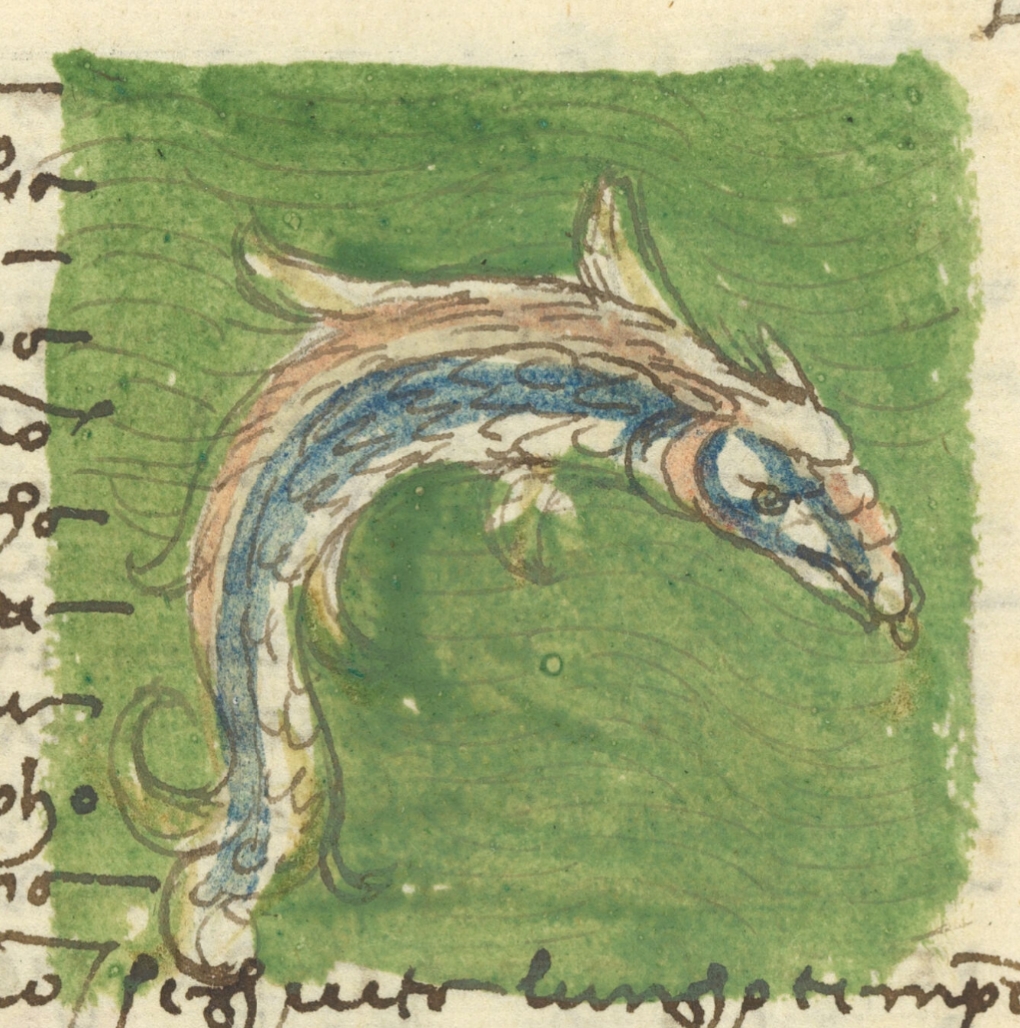
Della natura d'uno pescie lo quale si chiama virgilia [sawfish]
Uno pescie è lo quale se chiama virgilia ; è grande e currente como astore e le sue alette sonno tagliente como rasoio. E corre si fortemente per lo mare che, quando elli trova una nave andare a vela, si se paregia colla nave, e seguiscela per volta bene milia centi e più, se lo viagio è cussi longo. Quando la sua legeressa non può più seguitare lo corso della nave, sì se prova d' inghiottirla, e quando vede che non la può inghiottire, si chiude l'ale e lassase cadere in fundo per dolore ch'à de la nave che se parte da lui. Questo pescie si potemo asimiliare al dimonio, e la naves potemo assimiliare al buono homo, che sichome lo pesce seguisce molte millia la nave, chosi seguissce lo dimonio molto tempo lo buono homo tentandolo e provandolo e conoscendolo, e quando elli vede che l'omo è più forte a la temptatione ch'elli non è a ttemptarlo, e vedelo partire de questo mondo con bone operatione facte, si si briga di poterlo impedire a la fine per menarlo seco in inferno, e lo buono homo si parte da lui con bona fine e vane in de lo regno del cielo. Unde lo dimonio ae si grande dolore che non se potrebbe contare. E però è questi d'asimiliare a lo dimonio, perché elli è si leggieri cosa lo dimonio che in uno momento po essere da l'uno capo del mondo a l'altro.
There is a fish called Virgilia; it is large and swift like a goshawk, and its fins are as sharp as a razor. And it races so fast through the sea that, when it encounters a ship under sail, it catches up with the ship and follows it for miles or more at a time, if the voyage is so long. When its fin can no longer follow the ship's course, it tries to swallow it, and when it sees that it cannot, it folds its wings and lets itself fall to the bottom out of grief for the ship's parting from it. This fish can be likened to the devil, and the ship can be likened to the good man, who, just as the fish follows a ship for many miles, so the devil follows the good man for a long time, tempting him, testing him, and knowing him. And when he sees that the man is stronger than he is to resist temptation, and sees him depart from this world with good deeds performed, he worries about how to prevent him from dying and take him with him to hell, and the good man departs from him with a good end and ends in the kingdom of heaven. Hence the devil suffers such great pain that it cannot be counted. And therefore he should be likened to the devil, because the devil is such a light thing that in a moment he can be from one end of the world to the other.
Fables
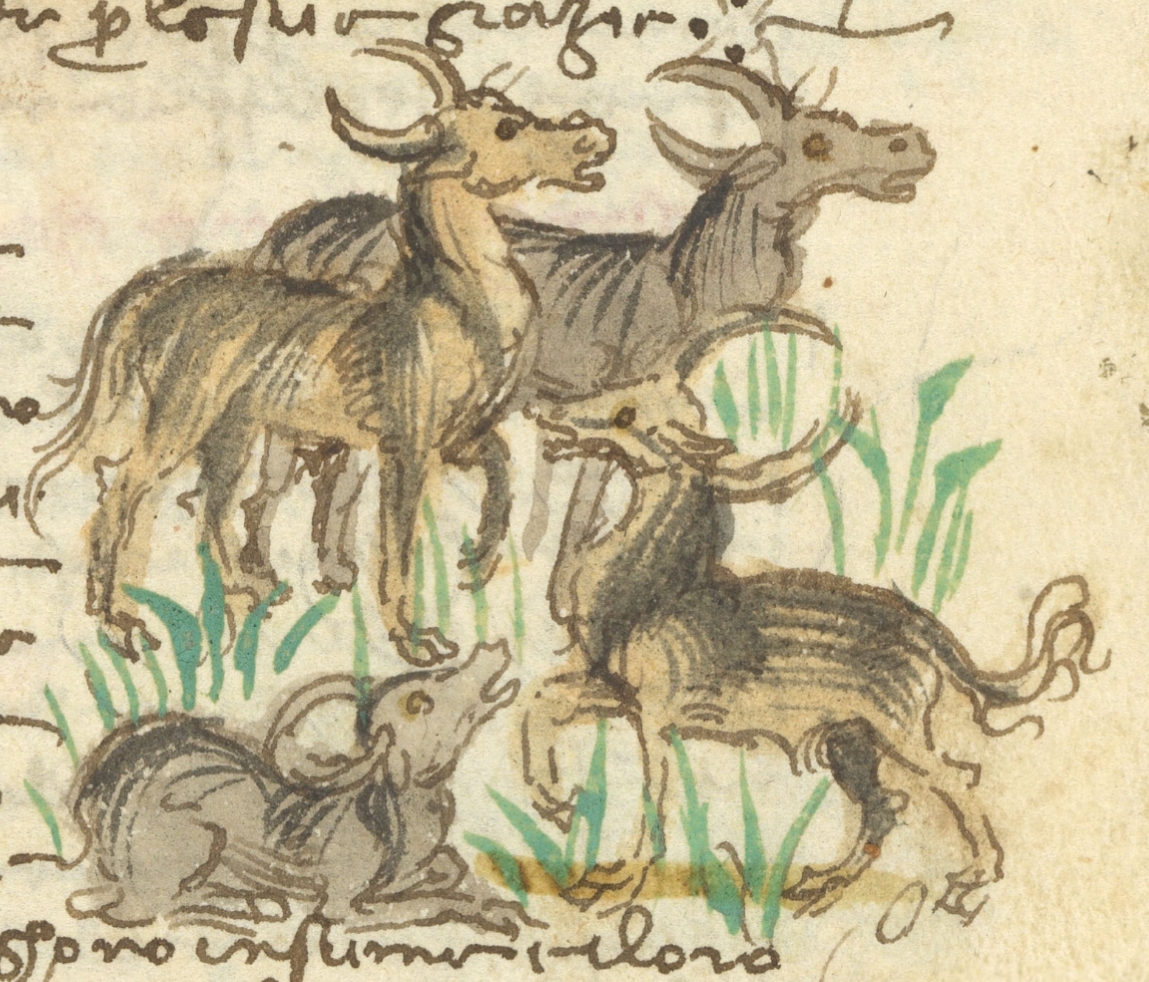
De la compagnia de li quattro tori (Of the company of the four bulls)
Quatro grandi e forti tori si giurono insieme e non si doveano mai dipartire, e poi che elli aveano iurato, sempre andavano insieme in ogne parte, e a qualunque parte elli andavano, né lupo né altra bestia temeano, ma lo leone temea loro. Ma di pogo tempo da ch'elli funo dipartiti l'uno da l'altro, si venne lo leone e occiseli a uno a uno e manicoli. Questo significa quelli homini li quali per paura d'alcuno suo magiore e più forte stanno insieme, e tanto quanto stanno insieme li suoi magiori li temeno et non s'ardisceno ad offenderli ; ma quando sono dipartiti l'uno da l'altro, li suoi maggiori li puoteno offendere e molto male fare, e perciò quando due o tre o quatro o più ànno discordia con suo magiore, si deno stare insieme, e mai non si deno partire ; imperciò che tanto quanto stanno bene insieme non temerano 6 loro magiore né lo magiore non è ardito di offenderli ; ma quando sono dipartiti che l'uno non aiuta l'altro, viene lo loro maiore e offendeli e fa loro molto male.
Four large and strong bulls swore an oath together that they would never separate, and after they had sworn, they always went everywhere together, and wherever they went, they feared neither wolves nor any other beasts, but only the lion. But a short time after they had separated from each other, the lion came and killed them one by one and their little ones. This signifies those men who, out of fear of some greater and stronger than themselves, remain together, and as long as their elders remain together, they fear them and do not dare to harm them; but when they have separated from each other, their elders can harm them and do much harm, and therefore when two or three or four or more have discord with their elder, they must remain together and must never separate; because as long as they are well together they do not fear their elders, nor does the elder dare to offend them; but when they are separated and one does not help the other, their elder comes and offends them and does them much harm.
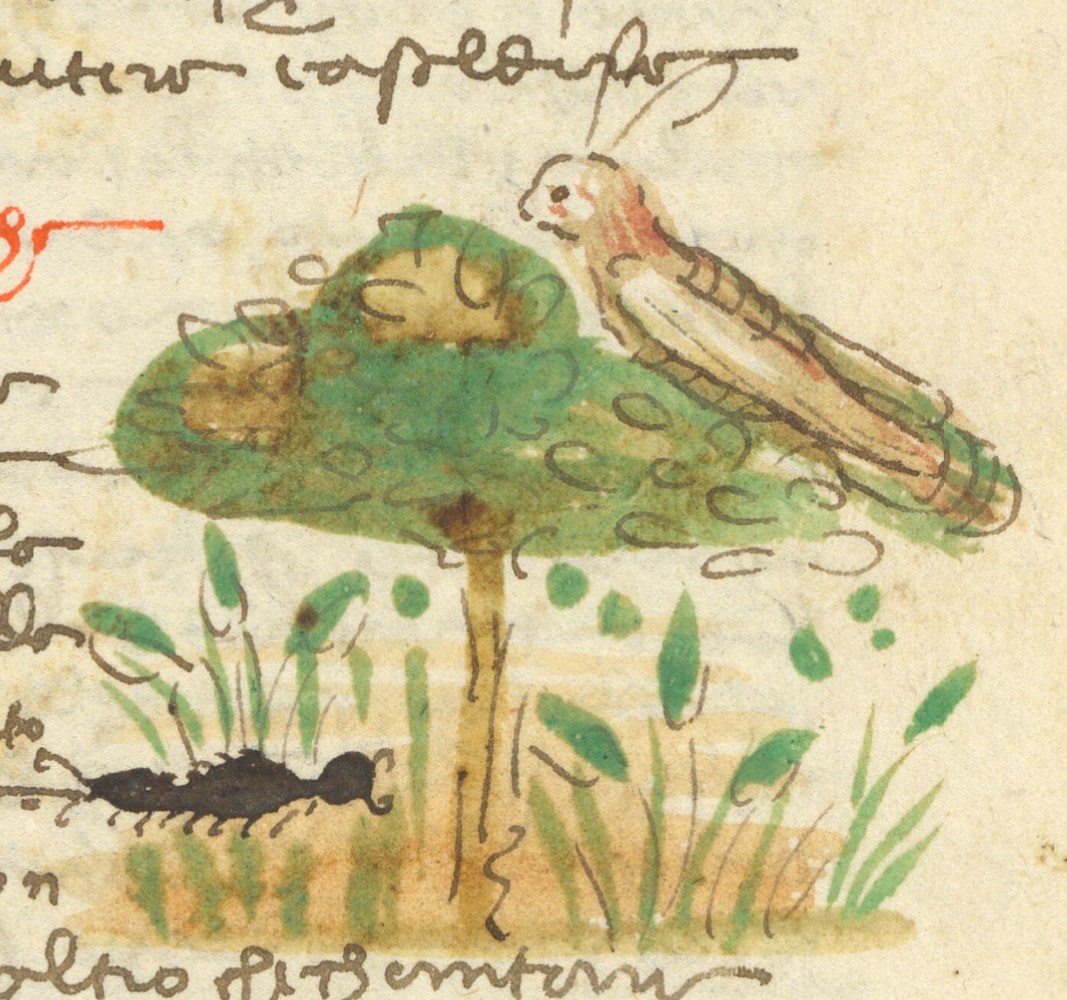
Del dimando che fe la cicala a la formica (Of the question the grasshopper asked the ant)
La cichala venne a la formica di verno e disseli: Dami del tuo grano, che moio di fame. Allora disse la formica: Certo non te ne daragio, ch'io molto mi faticai e lavorai d'estate, unde io potesse vivere di verno; e tu non volesti lavorare se none in cantare, e imperciò che tu non volesti altro fare d'estate che cantare, vae aguale che è verno e salta, che non ne porterai neiente del mio. E così la cichala non poté avere nulla della formicha. Questo è dicto a nostro castigamento. La cichala significa quelli homini li quali quando denno lavorare unde vivano, in alcuno profecto fare non lavorano né non fanno alcuno profecto, e poi quando non ae unde viva, volno lavorare e non ponno perché non è tempo. E perciò disse Salomone di quelli homini: O piger vade ad formicam et illa monstrabit tibi hoc quod debes facere. La quale ciascuno homo, quando ave tempo da lavorare, lo quale è di fine che elli adimora in questo mondo, dee tanto lavorare in buone opere, a ciò che per innançi viva sempre in de la gloria de Dio; che questo sapia ciascuno, per certo, che chi in questo secolo non lavora quando à tempo; e di quello che disse Salomone, ut piger debeat discere a formica, cioè che ciascuno homo debia imparare da boni maestri bone opere fare, in de le quale opere tutti noi faciamo in fine a la fine durare.
Of the question the grasshopper asked the ant. The grasshopper came to the ant in winter and said, "Give me some of your grain, for I am starving." Then the ant said, "Certainly I will not give you any, for I toiled and worked hard in the summer, so that I could live in the winter; and you did not want to work except singing, and since you did not want to do anything in the summer but sing, so for the winter and spring, you will take nothing of mine." And so the grasshopper could have nothing of the ant. This is said for our punishment. The grasshopper represents those men who, when they have to work to live, do not work in any purpose nor make any purpose, and then when there is no place to live, they want to work but cannot because it is not the time. And therefore Solomon said of those men: "O sluggard, go to the ant, and it will show you what you must do." That each man, when he has time to work, which is the purpose of his stay in this world, ought to work hard at good works, so that from now on he may always live in the glory of God. Let everyone know this for certain, that he who does not work in this world when he has time; and of what Solomon said: "The sluggard should learn from the ant," that is, that each man ought to learn from good teachers how to do good works, in which works we all ultimately make ourselves endure.
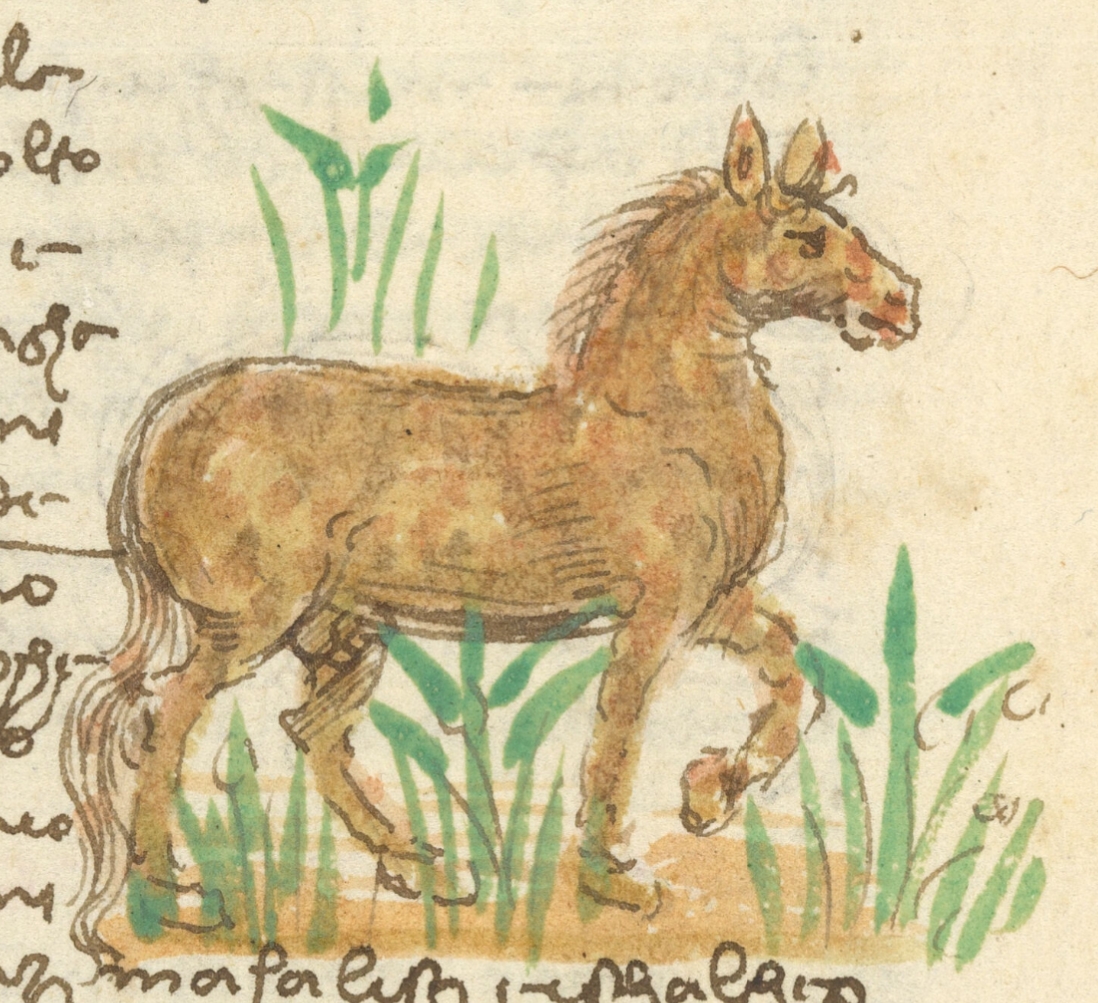
D'uno cavallo grasso et uno magro (Of a fat horse and a lean one)
D'uno cavallo grasso et uno magro. Uno cavallo grasso, correndo di qua e di lae per suo dilecto, vide un altro cavallo molto magro, e incontenente lo incominciò a perchuotere et a calterarlo perché avea lo dosso rotto e con piage e la piagia piena di vermini. Disse a lui: Va via e levati d' inanti da me, ch'io non ti posso sufferire per la pussa che viene dello tuo dosso. Disse lo cavallo magro con grande humilitade al grasso: Perché m'ài in odio ? altra volta fui io così grasso e bello come se', né non fui peiore di te quando io ero un signore, e innanti ch' io fusse magro e ferito. Mal fai che tu non ài misericordia di me secondo che tu dee, ma exaltiti e calcetregi me. Disse lo cavallo grasso con superbia: O fastidioso, come ài tu ardimento di favellare contra me, lo quale sono forte e bello ? e poi che questo disse, sì lo calcetroe e gittolo da la lunga da sé. Di pochi die stando lo cavallo grasso in della stalla con grande dignitade, una pessima e ria infirmitade viene in del piede suo, e di fine³ che lo suo signore non lo pote sanare, se llo face mettere in quello medesmo campo in del quale lo cavallo magro era; ma allora non era magro né infermo. E quando quelli che era innanti grasso e sano vedesse l'altro sano e grasso, e sé vide magro e infermo, ebbene vergogna d'apressimare a colui, ma quello altro corse a llui incontenente e dissegli: Tu se' aguale magro, et ài li tuoi piedi infiati; non ti torbare, ma stae quanto tu voli e mangia de die e di nocte di questa erba, che cutale è quie l'erba che tosto sanerae li tuoi piedi e farati grasso e sano, e poi tornerai a la tua prima dignitade, e poteraiti aricordare della mia infirmitade. Allora quelli che fue innanti magro, ritornoe in sua stalla in quello honore che era in prima, e lo cavallo grasso rimase in del campo e fue morto. Questo dicto significa che nullo homo non dee avere né dispregiare lo suo proximo se ello è povero né in anima né in corpo.
Of a fat horse and a lean one. A fat horse, running here and there for his own pleasure, saw another very lean horse, and began to beat and kick him because his back was broken and inflamed, and the wound was full of worms. He said to him, "Go away and get away from me, for I cannot bear you because of the pain that comes from your back." The lean horse said with great humility to the fat one, "Why do you hate me? I was once as fat and handsome as you are, nor was I any worse than you when I was a lord, and before I was lean and wounded. You do wrong in not having mercy on me as you should, but exalting yourself and kicking me." The fat horse said haughtily, "Oh, you troublesome one, how dare you speak against me, who am strong and handsome?" And when he had said this, he kicked him and threw him away. For a few days, while the fat horse was standing in the stable with great dignity, a terrible and bad disease came to his foot, and finally, since his master could not cure it, he had him put in the same field where the thin horse was; but by then he was neither thin nor sick. And when the one who had been fat and healthy before saw the other healthy and fat, and saw himself thin and sick, he was ashamed to approach the other, but the other ran to him and said to him, "You are just as thin, and your feet are swollen; don't bother, but stay as long as you want and eat this herb day and night, which is the herb that will soon heal your feet and make you fat and healthy, and then you will return to your first dignity, and you will be able to remember my infirmity". Then he who was previously lean returned to his stable in the same honor he had before, and the fat horse remained in the field and was killed. This saying means that no man should have or despise his neighbor if he is poor in body or soul.
Additional Animals
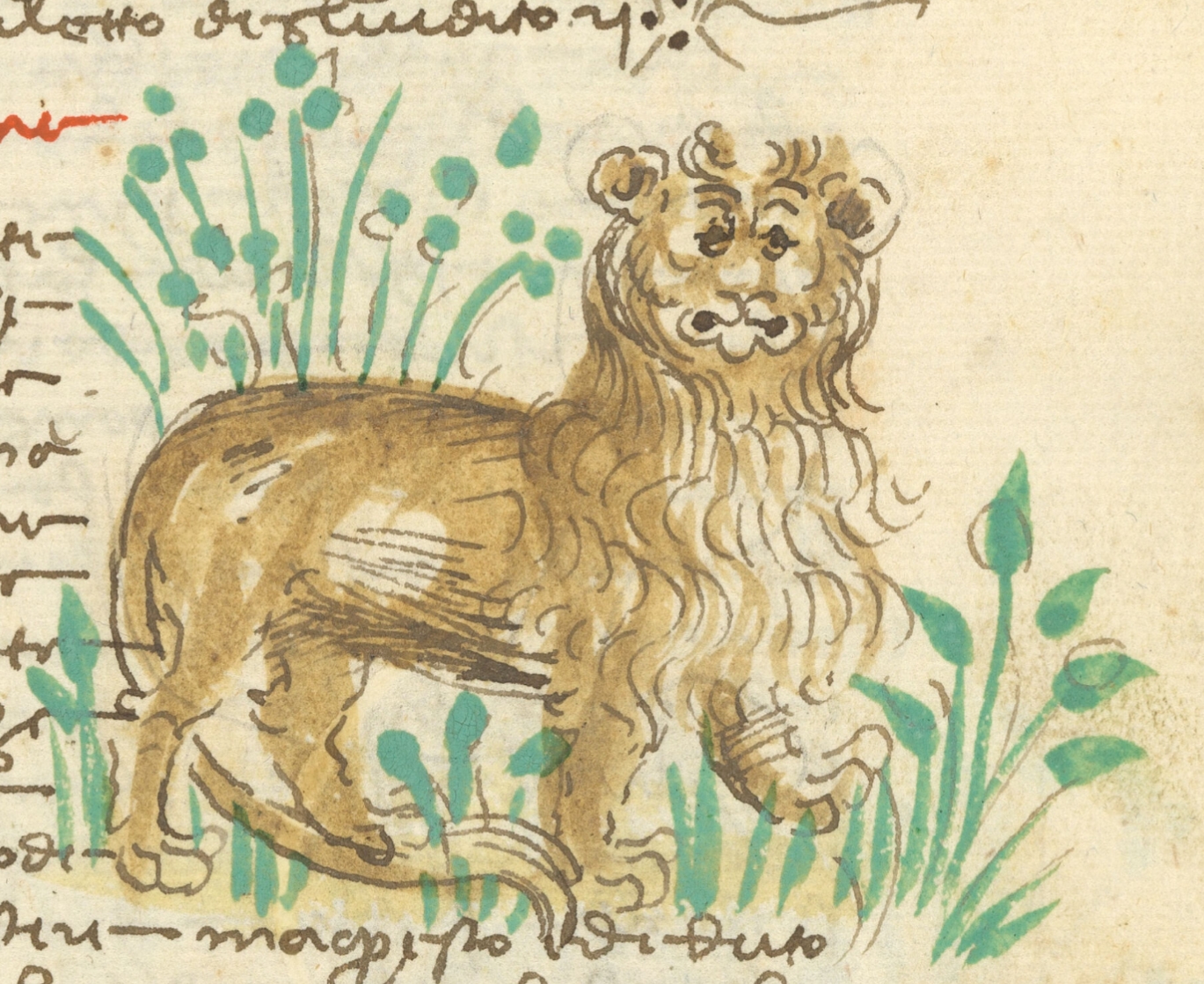
De le nature e de le figure e de le propietà le quali reparno e sono in del leone (Of the natures, forms, and properties that belong and exist in the lion)
Leone est quasi capo e signore di tucte le bestie salvatiche e dimestiche. Chusì di lui potemo dire e fare fighura: como lo peradore è signore e comanndatore di tucta gente, cusi non è nulla bestia che di lui non tema e che a la sua potenssia possa avere alcuna difensia. Circa de la sua potensia e la sua ferocitade cioè feressa, ben è alcuno che mi osa dire che ciò non li adviene i lei per apensata prodessa, ma per ignoransa di no conoscere. Ma pur questo è veduto provato e provasi ciasciuno die, ch'elli è la piò coraggiosa bestia e la piò aldace cioè prunta a offendere che nulla altra bestia che sia, specialmente quande elli è provocato o citato a chosa unde elli prende curruccio u scaldamento. Avemo qui molto bella e utilissima figura assai morali e notevele, si chome di quelli homini che sono potenti e forsevele d'avere e di persone e già perciò non sono lievi a ccurruccio prendere né sono oltraggiosi né soperchieveli contra li menipossenti.
Pone fiucloco, lo quale sì come se sa fo grande autore et savio, che leone ha tre proprietà e nature; delle quale fae tre figure. Lassaremo le figure alli predicatore e a li sermonatori, che ad ogne materie lo vognono adactare, et diremo de le suo' nature. La prima si è ch'ello diventa irato, fero e fellone quando ello vede li suoi figlioli nati morti sença neuno sentimento. La seconda si è ch'elli gridano più volte fortemente; allora quelli figlioli se resenteno, aprendo li occhi, monstrando quasi che resuscitasseno da morte. Qui à fructuosa figura de la voce de Christo e dei suoi messi, la quale serebbe longa a scrivere. La terça delle sue nature si è questa, che per maestrale sentimento, quando ae li figlioli in della tana, andando e tornando lo maschio e la femmina, non volendo che di loro traccie si trovi quelle forme, le orme che fanno co li loro piedi colla coda disfanno. Questa è figura de grande exemplo, cioè che cussi li homini de loro peccati denno fare si per l'amore de Dio e si per la tema de l'offensione de l' inimico.
The lion is the leader and lord of almost all wild and domesticated beasts. Thus we can say and portray him: as the warrior is lord and commander of all people, there is no beast that does not fear him and that can have some defense by his power. Concerning his power and his ferocity, that is, his wounding, there is indeed someone who dares to tell me that this does not happen to him through anticipated bravery, but through ignorance of not knowing. But this has been seen and proven, and is proven every day, that he is the most courageous beast and the most bold, that is, the most ready to attack, than any other beast, especially when he is provoked or summoned to something from which he takes a sting or heat. Here we have a very beautiful and useful figure, very moral and remarkable, as well as those men who are powerful and possess possessions and people, and therefore are not easy to take on, nor are they insulting or overwhelming against the less powerful.
Physiologus, who is known to be a great and wise author, describes a lion as having three properties and natures; of which he makes three figures. We will leave the figures to the preacher and sermonizers, who wish to adapt him to any subject, and we will speak of his natures. The first is that he becomes angry, fierce, and treacherous when he sees his children born dead without any feeling. The second is that they cry out loudly several times; then those children come to their senses, opening their eyes, appearing as if they were resurrected from the dead. Here is a fruitful example of the voice of Christ and his messengers, which would be long to write about. The third of his natures is this: that by a masterly feeling, when the children are in their den, the male and the female, going and returning, do not want their forms to be found, and with their tails they undo the footprints they make with their feet. This is a figure of a great example, namely, what men must do for their sins, both out of love for God and out of fear of offending the enemy.
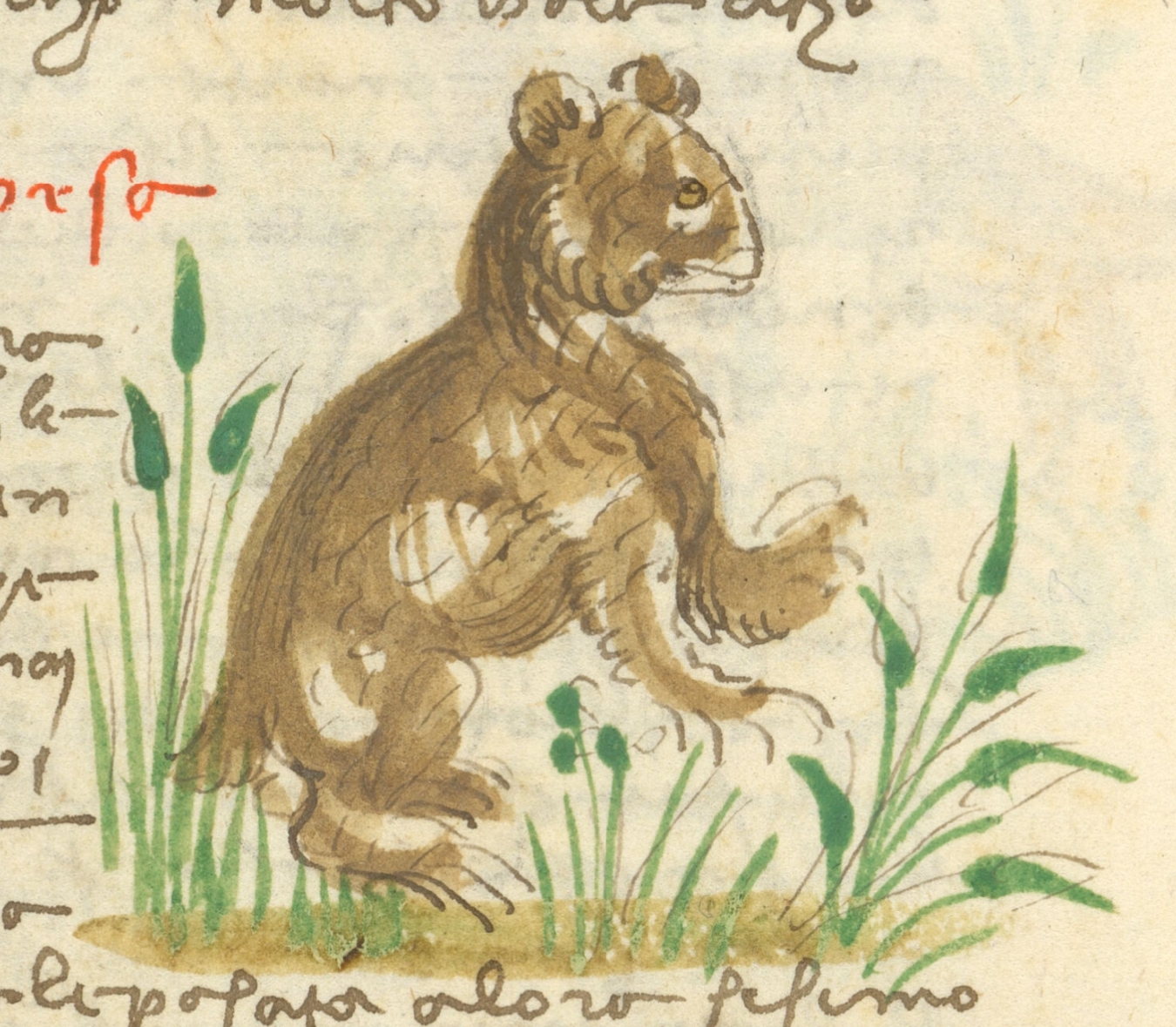
Della natura et della proprietà de l'urso (Of the nature and properties of the bear)
Urso è bestia assai crudele et fiera, e de tanta grandeçça e potentia che assai sono stati homini conquisi da loro; si como se conta che nell'isola de Corsicha ve n'à assai de grandi. Di questo animale se notano naturalmente questa proprietà, cioè ch'elli sia pigro e si in tal modo che, se grande fame nol cacciasse et nol fesse movere, mai da giacere non se moveria. Lo quale vicio se rio è nell'animale e dampnoso, molto maiormente è nell'omo e mortale e periculoso. Et però dice lu savio all'omo pigro: Guarda a la formica e pensa en delli suoi andamenti e enprenderai. Trovase en elli libri della vita delli santi padri che, essendo un grande et crudele re et volendo per superbia sottomettere tutte l'opere de misericordia ch'era dispiacevele, lo quale re avia nome Totila; venne a li suoi orecchi per dicemento d'alquanti si como Cerbonio vescovo de Populogna avea albergati duy cavalieri scampando loro la vita della mano de la gente del supradicto re; lo quale evescovo era sempre usato de fare cussi a tutte bone gente. Lo re mandò per lui per farlu morire con grandes martire, cioè che in sua presencia et de tutto lu populo lo volea fare divorare ad uno urso, lo quale era molto fellone e crudele, et questo ordenò en el suo avenimento che l'urso fusse lassato, e cussi se fe; et l'urso venne molto currendo e quando fu giunto a li piedi di questo homo di Dio, tucta la rabbia e la feressa perdette et humiliossi a leccali li piedi; de la qual bestia e del suo exemplo, sichome fu piacere di Dio, questo re con tucta la sua gente, disposta la crudeltà e la superbia da una parte, a li piedi di questo sancto padre Cerbonio tornono, conoscendo per la vertude di tanto miraculo che questa era opera di Dio.
The bear is a very cruel and fierce beast, and of such great size and power that many men have been conquered by it; as it is said that on the island of Corsica there are many large ones. This property of this animal is naturally noted, namely, that it is lazy, so much so that, if great hunger did not chase it and make it move, it would never move from lying down. This vice is serious and evil in animals, but much more so in humans, deadly and dangerous. And therefore the wise man says to the lazy man: Look at the ant and think about its ways and you will understand. It is found in the books of the lives of the holy fathers that, there being a great and cruel king and wanting out of pride to subdue all the works of mercy that were displeasing to him, this king was named Totila; It came to his ears through the advice of some that Cerbonio, bishop of Populonia, had lodged two knights, saving their lives from the hands of the men of the aforementioned king; which bishop was always accustomed to do this to all good people. The king sent for him to have him killed with great torment, that is, in his presence and that of all the people he wanted to have him devoured by a bear, which was very felonious and cruel, and this he ordered on his arrival that the bear be released, and so it was done; and the bear came running very fast, and when it reached the feet of this man of God, it lost all its rage and wound and humbled itself to lick his feet. of which beast and of its example, as it was the pleasure of God, this king with all his people, having put cruelty and pride aside, returned to the feet of this holy father Cerbonio, recognizing by the power of such a miracle that this was the work of God.
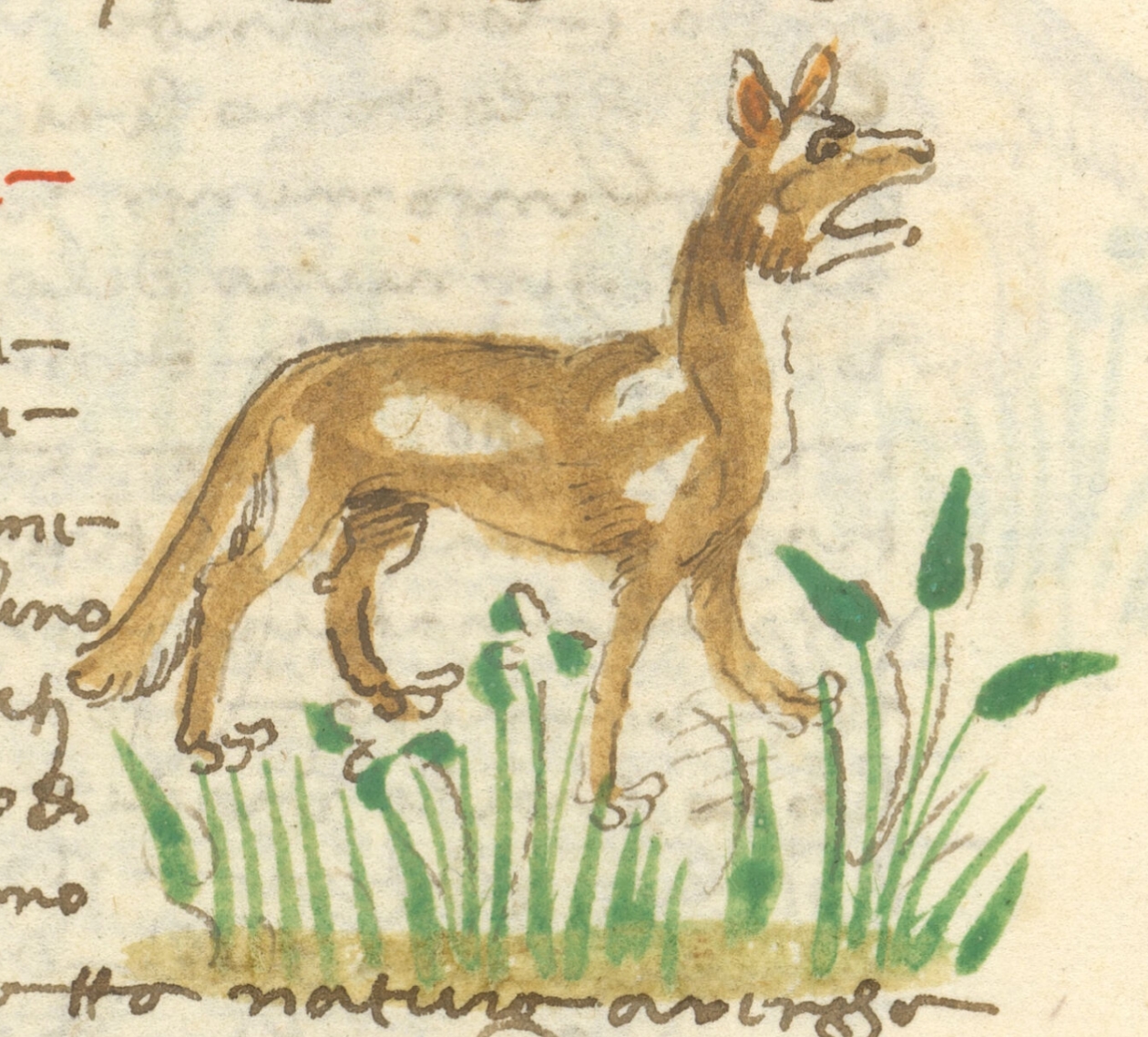
De la natura de la volpe (On the nature of the fox)
Volpe è bestia molto fraudolente et ingannevele, che infingendose si como fuosse morta, tenendo la lengua fore de la gola e nullo fiato rendendo, et allora l'uccegli che beccha carogna, credendo che sia morta, vae allei a beccharglie la lengua e tutto l'altro corpo, et ella tanto la soffere che di questi ucceli prendeno; et sì come dice fiziolaco, rende loro pegio con denti che loro non fa allei col beccho. Et naturalmente non va diritta per via, ma sempre cioppicando, però che à le gambe diritte più corte che le sinestre. Alcuna volta, quando è appresiata dai cani, leva la sua coda e li cani la prende, e remane la boccha del cani piena de pele, per la quale cagione alcuna volta scampa. Naturalmente se porta grande odio con uno animale che à nome tasso, e questo aviene per cagione de le loro tane; e per tale engegno enganna la volpe lo tasso e tolleglie la sua tana, cioè che ella glie soça la sua tana collo suo sterco e colla sua urina, la quale si è molto puççulente, e per tal modo la toglie la volpe al tasso, però che ll'abandona. Anchora usa ella grandissima malitia fugendo dai cani; cioè quando ella vede bene ch'ella non può scampare, e questo si è ultimo suo remedio, che ella se mette la coda entra le gambe et urinavi sue e tra' questa coda co l' urina e si dà sopra la testa al cane che la vole prendere, et allora el cane per la grande puçça de l' urina lassa la sua caccia e per cotale modo assai volte scampano le decte volpe.
The fox is a very deceitful and deceptive beast, pretending to be dead, sticking its tongue out of its mouth and not breathing. Then birds begin pecking at this carrion, believing it to be dead, and go after it and peck at its tongue and all its other parts, and it suffers so much that the fox takes these birds; and, as the poet says, it does more harm with its teeth than they do with their beaks. And by nature it does not walk straight along the road, but always staggers, because its right legs are shorter than its left. Sometimes, when approached by dogs, the fox raises its tail and the dogs catch it, leaving the dogs' mouths full of fur, which is why it sometimes escapes. By nature the fox bears great hatred for an animal called the badger, and this happens because of their dens; and by this ingenuity the fox deceives the badger and takes away its den, that is, the fox pollutes its den with her dung and urine, which is very smelly, and in this way the fox takes it away from the badger, because the badger abandons it. She also uses great cunning in fleeing from dogs; that is, when she clearly sees that she cannot escape, and this is her last resort, she puts her tail between her legs and urinates there, and with the tail and the urine, she attacks the dog who wants to catch her. Then the dog, because of the great stench of the urine, gives up his chase, and in this way the foxes often escape.
